

Build the tool your team needs.
I design and build the internal tool, automation, dashboard, integration, or AI-assisted workflow your team needs. We choose the tools based on the job and what will be easiest for your team to run.
Priced after we define the scope
You understand the workflow well enough to decide what should be built.
A Business Systems Build turns a clear workflow problem into a usable system. It fits when the users, desired result, important requirements, and first release can be defined before implementation begins.
- Your team agrees on the workflow and the problem that needs to be fixed.
- You can identify the people who will use or manage the system.
- Existing software can't support the workflow without repeated manual effort or unreliable handoffs.
- The first useful version can be separated from later improvements.
- You want one person to handle product decisions, design, implementation, and handoff.
A usable system built around your team.
Working software
A focused first version of the internal tool, automation, dashboard, integration, or AI-assisted workflow defined in the scope.
Clear workflow states
The important statuses, decisions, approvals, failures, and next actions are visible to the people responsible for them.
Connections to existing tools
When the scope requires it, the system connects to the software and data your team already uses instead of creating another disconnected process.
Documentation and handoff
Your team receives the information needed to use, maintain, and extend the system, along with the reasoning behind important product and technical decisions.
Each build centers on one workflow and a defined first release.
A build may include
- An internal operational tool
- Workflow automation
- A reporting or decision dashboard
- An integration between existing systems
- An AI-assisted review, extraction, or decision workflow
- A focused product surface around a recurring business process
Where the scope stops
The agreed first release, integrations, users, and handoff requirements are written into the scope before implementation begins. Additional workflows, major adjacent systems, and ongoing improvements are scoped separately.
How the build works
Confirm the first release
We turn the audit findings or existing requirements into a clear scope. We agree on the users, workflow, necessary features, integrations, risks, and what can wait.
Design the system
I map the screens, data, decisions, permissions, and failure states the system needs. You review the important product decisions before implementation goes too far.
Build and review
I build the system in usable pieces and review them with the people who will use it. Feedback is tied to the agreed workflow and first-release scope.
Put it into use
I help your team move the system into daily use, document what matters, and identify the next changes without hiding them inside the original scope.
What I need from you
- One person who can make scope and priority decisions
- Access to the people who will use or manage the system
- Access to the tools, data, and technical accounts required by the scope
- Timely review of product decisions and usable versions
- Clear notice when a business rule, dependency, or priority changes
I confirm the price and schedule before the build begins.
I confirm the price, schedule, milestones, and responsibilities after the workflow and first release are clear. If they aren't clear yet, the Business Systems Audit is the better place to begin.
Relevant proof

Client work
Genrupt
Building the systems an AI platform needed for paying teams.I helped build subscriptions, credit accounting, reliable background jobs, and agent access. Those systems helped Genrupt support its first 200 paying customers.
View Genrupt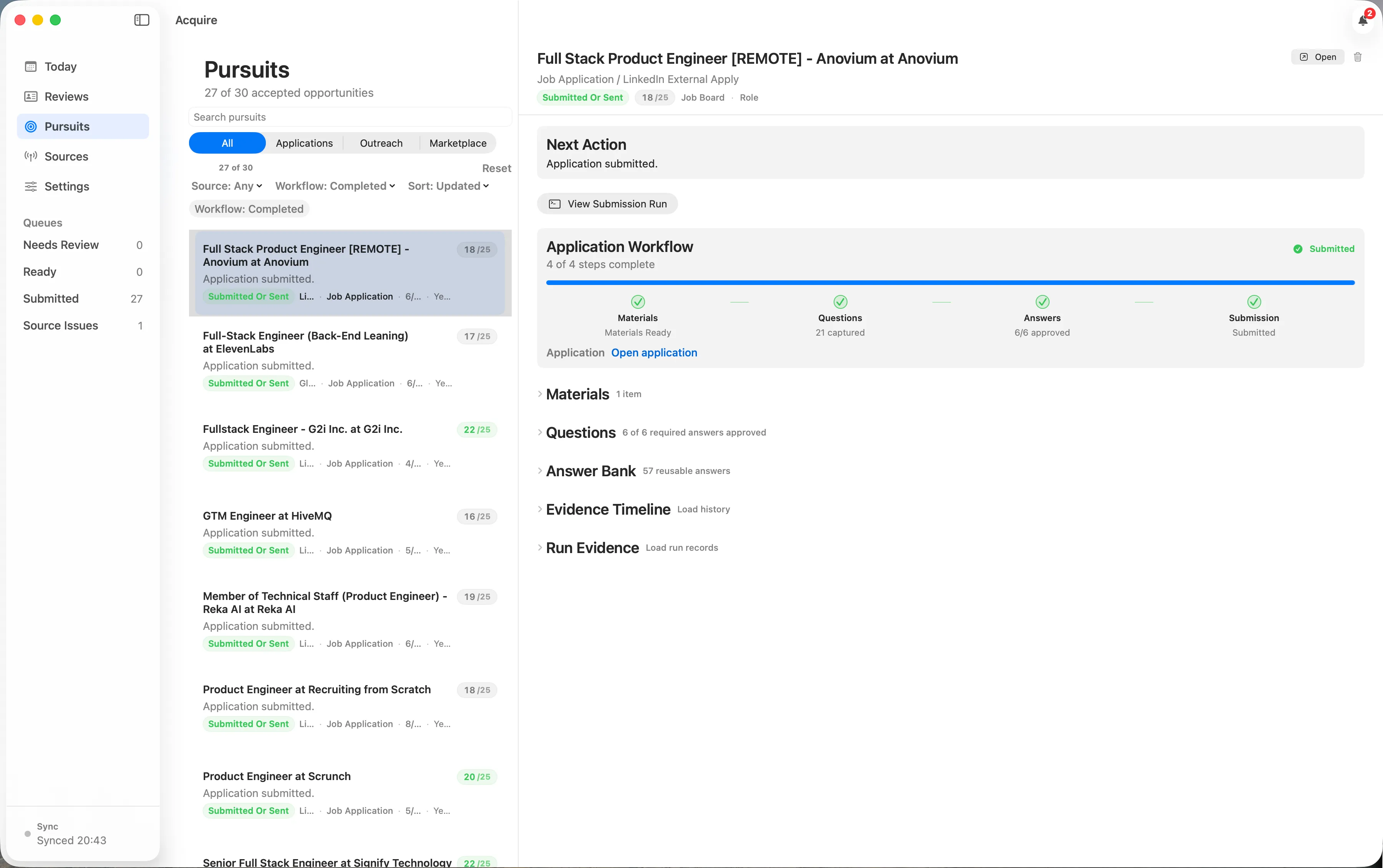
Independent work
Acquire
Bringing an acquisition workflow into one local system.Acquire brings sourcing, review, applications, outreach, evidence, agent activity, and recovery into one place. Its review steps and saved state make automated activity easier to inspect and resume.
View Acquire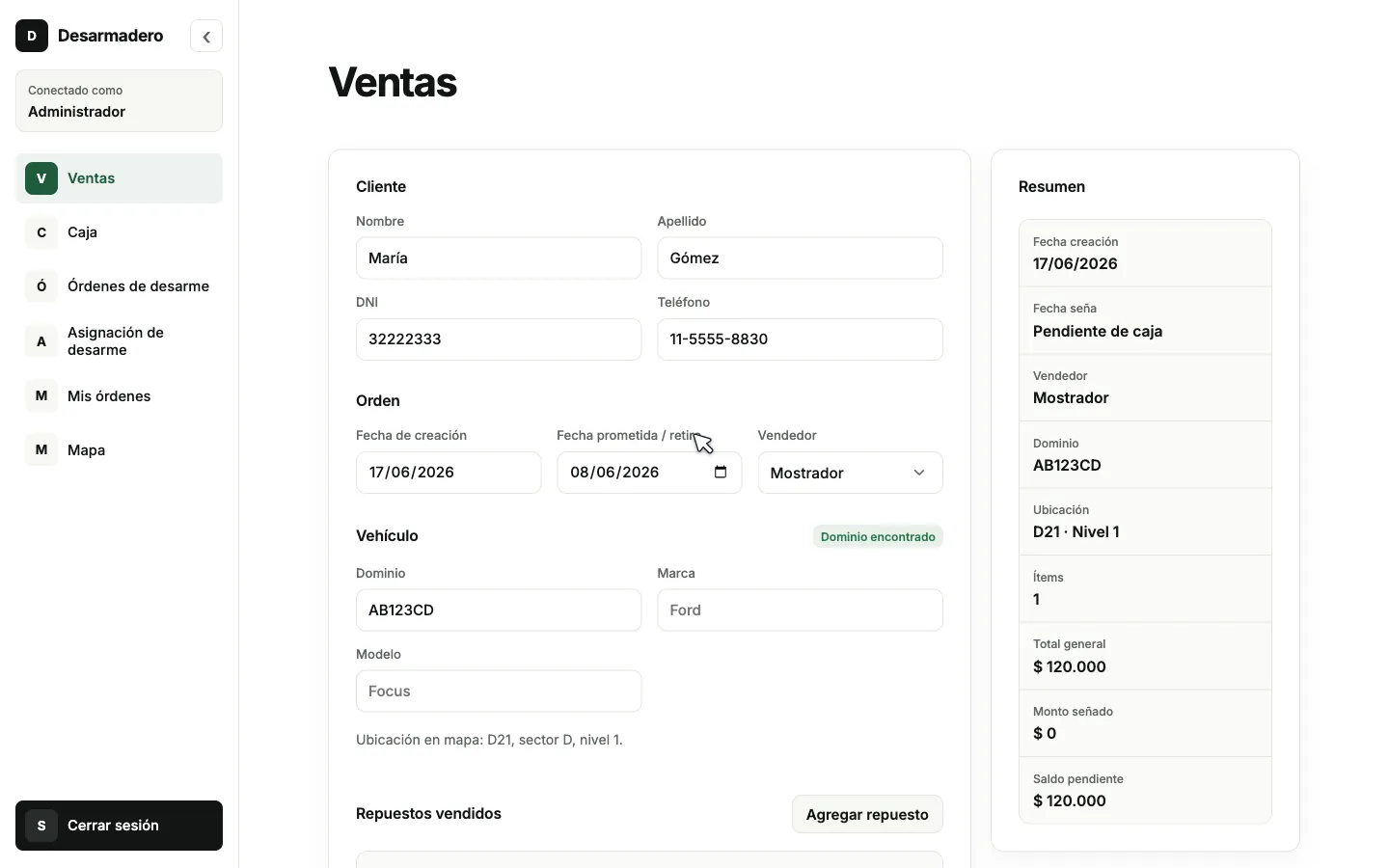
Client work
Desarmadero Operations
One discovery call became a workflow map, specification, and working prototype.An auto-dismantling yard was running sales and fulfillment through paper sheets, WhatsApp, Excel, and memory. I mapped the operation, wrote the product and functional requirements, and built a role-based prototype the client could review before committing to a full build.
View Desarmadero OperationsYour business keeps the system and the context behind it.
You keep the software, designs, documentation, setup information, and notes behind important decisions. I explain how the system fits the workflow, where its boundaries are, and what your team should know before changing it.
Questions people ask before starting
Can a build start without an audit?
Yes, when the workflow, users, desired result, and first release are already clear enough to scope. If important questions are still open, the audit can settle them before implementation begins.
Do you have to replace the tools we already use?
No. I look at the tools and data you already have. The build may improve them, connect them, automate steps between them, or replace only the part that no longer fits.
Will you use AI?
Only when it helps with a specific part of the workflow and can be made reliable enough for daily use. Many useful systems don't need it.
What happens after the first release?
Your team can take over, we can scope another build, or an Ongoing Technical Partnership can cover connected priorities that need continued attention.
Have a workflow that's ready to become software?
Tell me who uses it, what needs to change, and what a useful first version should make possible. I'll let you know whether there's enough clarity to scope the build.