Mucho Hangouts: Product Reliability and Team Delivery
Stabilized a live social-events product while the team kept shipping with clearer delivery patterns.
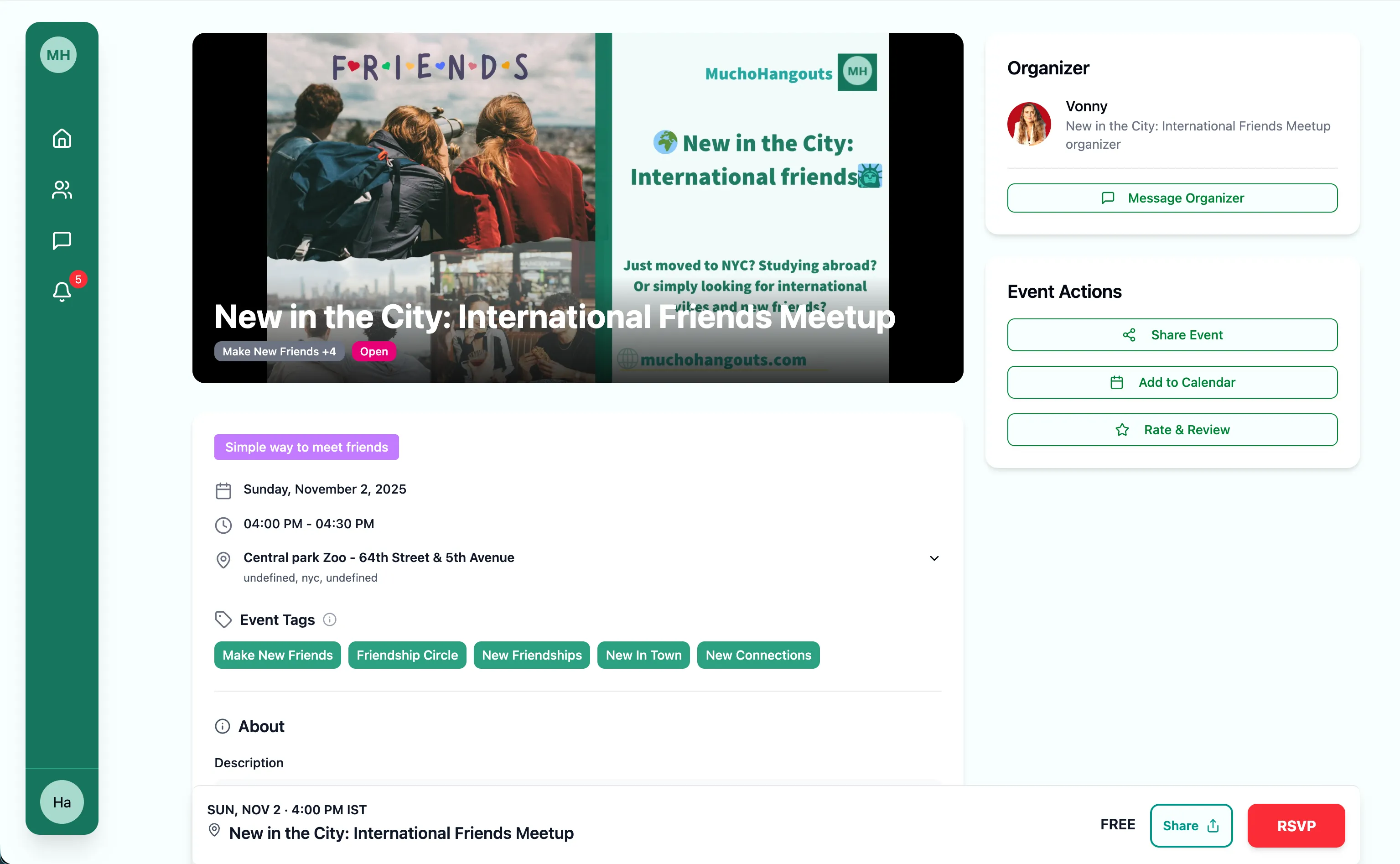
Project overview · 30 seconds
Stabilize the product without stopping delivery
Mucho Hangouts was a live social-events product with recurring reliability problems in messaging, notifications, and release flow. The work made those core workflows more dependable while the team kept shipping.
The engagement also left clearer patterns for the five-person product team, including two junior developers.
The constraint: no rewrite
Users depended on messaging, notifications, and everyday coordination, so the codebase could not be cleaned up in isolation. The team needed stronger foundations without stopping feature delivery.
The approach was practical: fix the failure points affecting users and delivery, then make the fixes repeatable for the team.
Change how the team shipped
Stabilize the boundaries first
I focused on API boundaries, app state, authentication interactions, and real-time behavior, where failures disrupted users and slowed delivery.
Make core interactions hold together
I reworked messaging and notification flows so authentication changes and app state stopped breaking those interactions as easily.
Turn fixes into team defaults
Code review, pairing, and day-to-day technical direction turned one-off fixes into clearer ways to build, review, and extend the product.
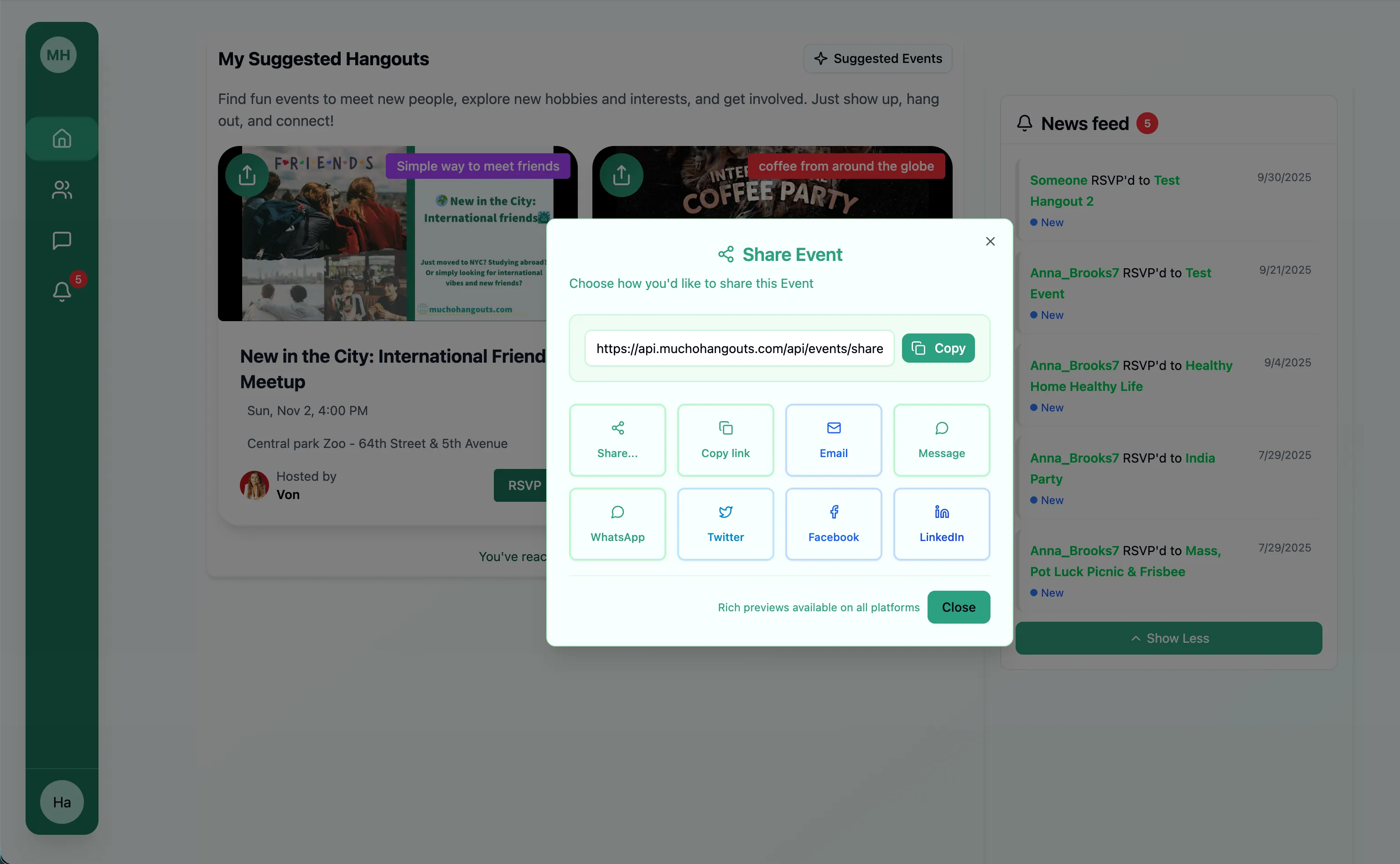
Messaging, fixed in place
Messaging and notification fixes shipped inside the existing product while the rest of the roadmap continued.
The operational result
Core social workflows became more dependable, new work followed clearer patterns, and the product kept shipping throughout stabilization.
Core social workflows became more dependable.
Messaging and notification fixes reduced recurring user frustration around day-to-day coordination.
New work had clearer patterns.
Typed backend and frontend patterns reduced guesswork for junior developers.
Stabilization happened alongside delivery.
The product kept shipping instead of requiring a long pause for cleanup.
The team needed less ad hoc senior rescue.
Code review, pairing, and direction helped the team build with less dependency on one-off fixes.
Have a product priority that needs an owner?
I join B2B SaaS teams on contract to ship the features, internal tools, and integrations already on your roadmap.