Buenos Aires Event Search Built on Real Local Data
Turns scattered Buenos Aires event listings into one search experience for finding plans by mood, neighborhood, and time.
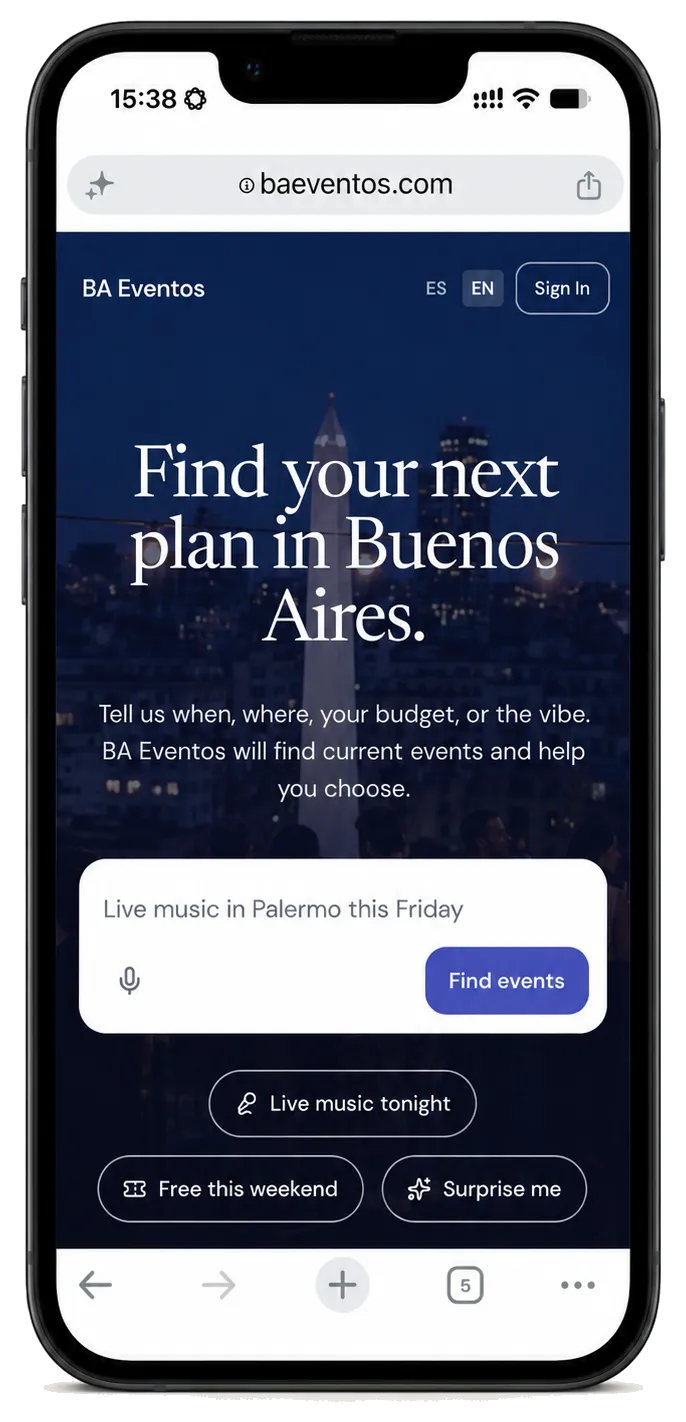
Project overview · 34 seconds
Finding a plan should not require six different sources
Buenos Aires event listings are scattered across social posts, ticketing sites, venue pages, and group chats. The details change often, and each source describes events differently.
I built BA Eventos so someone can ask for a plan by mood, neighborhood, or time and get current options from one cleaned catalog.
Clean the catalog before adding AI
Treat event discovery as a data problem first.
Imports had to be normalized, venues matched, and descriptions improved before search could return useful results.
Use AI to understand the question, not invent the answer.
Search matches meaning, not just keywords, so a question such as “romantic jazz in Palermo” can find the right records. Date, neighborhood, and category filters keep every answer tied to an event in the catalog.
From a vague idea to a useful shortlist
People can type or dictate a question, or begin with Tonight, This Weekend, or Surprise me. The same search works whether the request starts with a genre, a neighborhood, a date, or a mood.
A live product built on real local records
The visible search is only one part of BA Eventos. Imports, venue matching, cleanup, and search make it possible to answer a natural question without recommending an event that is not in the catalog.
9,200+ event records moved into one searchable catalog.
The product surfaces more than 1,250 upcoming events and organizes records for 1,500+ venues.
Every recommendation stays tied to a real event.
Search matches the meaning of a question, while date, neighborhood, and category filters keep the answer on records in the catalog.
The data can improve without rebuilding the product.
Automated imports and data-quality tools support venue matching, description enrichment, and record cleanup behind the public search.
A plan starts with one tap or one sentence.
Voice dictation and shortcuts for Tonight, This Weekend, and Surprise me reduce the work needed to begin a search.
A search result becomes a plan
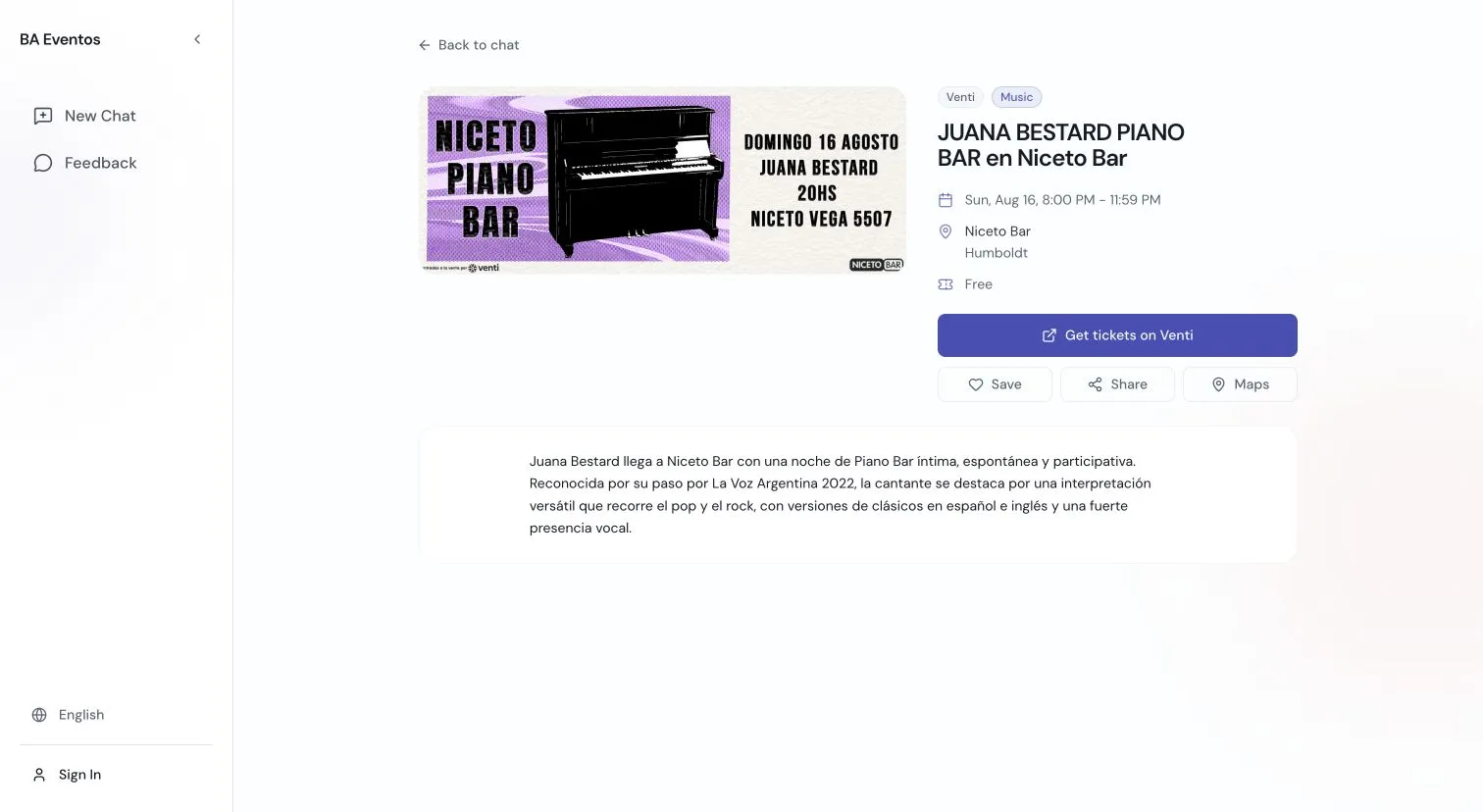
Each event page brings the practical details together: artwork, date, venue, price, description, and a ticket link.
Have a product priority that needs an owner?
I join B2B SaaS teams on contract to ship the features, internal tools, and integrations already on your roadmap.